Helen Stoilas is a New York-based arts writer and former Editor, Americas of The Art Newspaper.

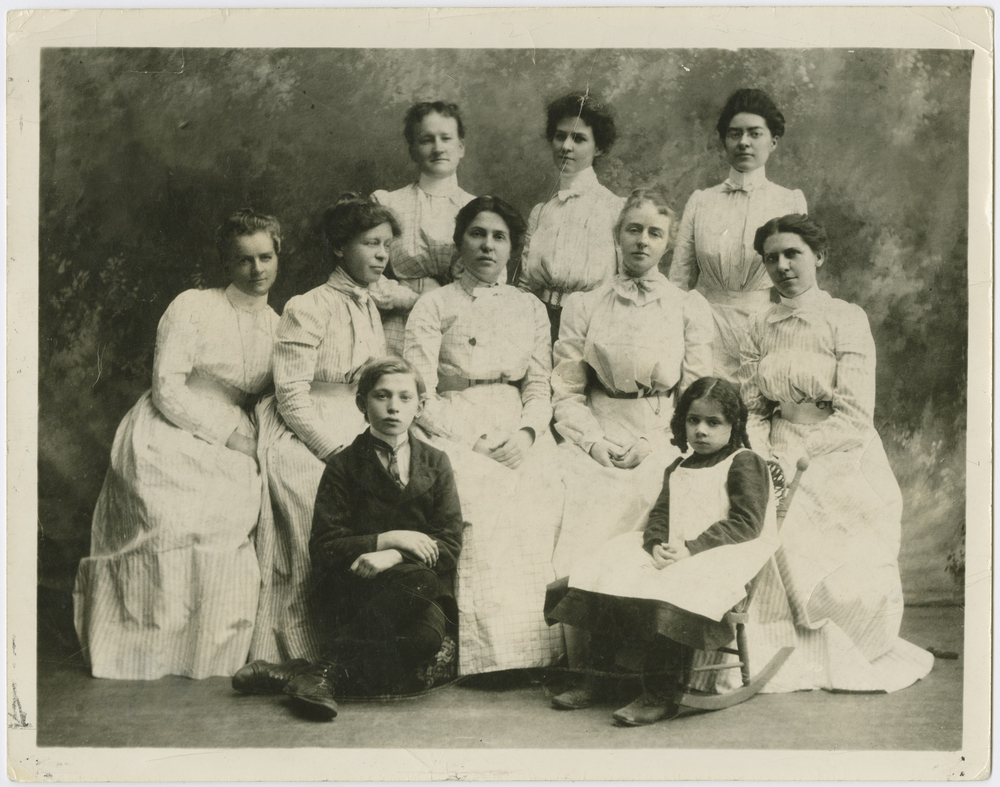
Lillian Wald (center) referred to the group of women who operated the Henry Street Settlement with her as “the Family.” Courtesy of VNS Health.
The Lower East Side, where Independent’s new home on Pier 36 is located, is today known as an artistic neighborhood. However, its history stretches back more than a century. While much of the area—originally an entire chunk of Manhattan bounded by 14th to Fulton Street to the north and south, and Broadway to the west—was first settled by the Lenape tribe and then used as farmland during the city’s early colonial history, by the 19th century it had transformed into a dense urban landscape where generations of immigrants lived, mainly in crowded tenement buildings
The poor living conditions among these communities prompted Lillian Wald, the pioneering humanitarian and nurse, to establish the Henry Street Settlement in 1893, where she offered free health care, social services and cultural education to Lower East Side residents. (Henry Street continues this important mission today and Independent has partnered with the non-profit to support its program through a fundraising gala during the fair’s opening.) Around the same time, the social reformer and photographer Jacob Riis published his images of Mulberry Street in the book How the Other Half Lives (1890), forcing city officials to recognize and work to improve housing in the area.
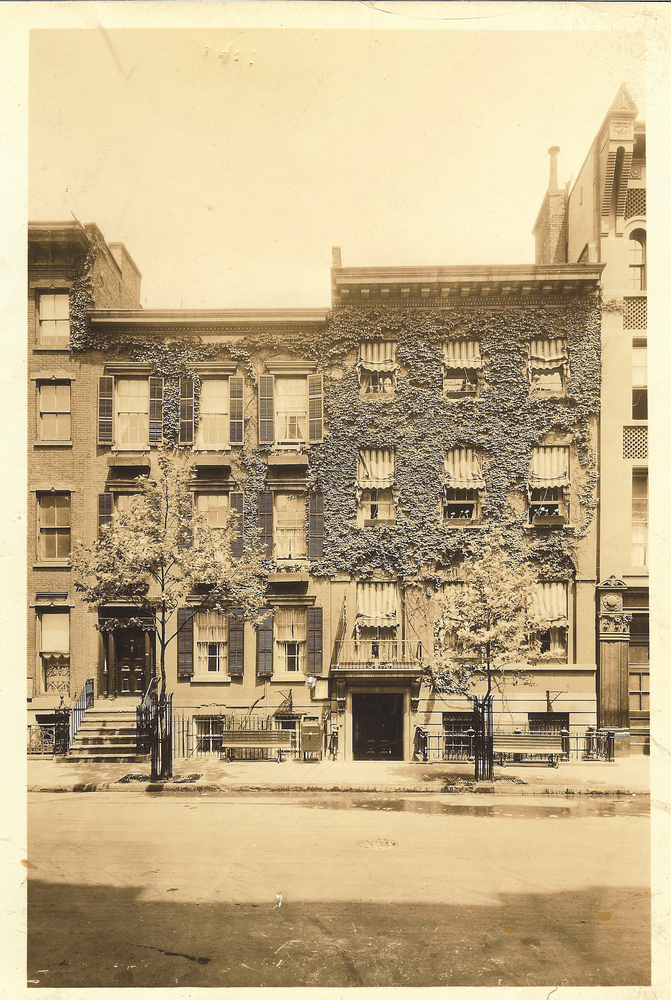
Henry Street Settlement headquarters, 1895. Courtesy of Henry Street Settlement.
Perhaps the first major group of artists to be associated with the neighborhood was the Ashcan School, a group of Realist painters including Robert Henri, George Bellows, and Maurice Prendergast, who captured the working-class lives of the residents in a sympathetic light. However, those artists lived in more comfortable, middle-class parts of the city. It wasn’t until the 1950s and 60s that the Lower East Side—especially its northernmost corner, now called the East Village—became known as the home of a thriving counter-culture of artists, musicians and writers, including Beat poets like Jack Kerouac and Allen Ginsberg. Painters like Willem de Kooning and Franz Kline set up their studios there and a collection of artist-run spaces known as the 10th Street Galleries was soon established, showing avant-garde work.
But as the city entered the 1970s, it struggled financially, as manufacturing and shipping industries moved to nearby New Jersey, and middle-class residents moved to the suburbs, taking their tax revenue with them. And rather than continuing to pay property taxes on their near empty buildings, many landlords burned them down to claim an insurance payout. Crime and drug use became rampant. In 1977, the same year the city suffered an extended blackout, the artist collective known as Colab was founded on the Lower East Side, and in 1980 would occupy an abandoned building on Delancey Street to stage the groundbreaking The Real Estate Show in protest against greedy property owners. It was shut down by city authorities after just one day, leading to protests by artists including Joseph Beuys and Alan W. Moore.
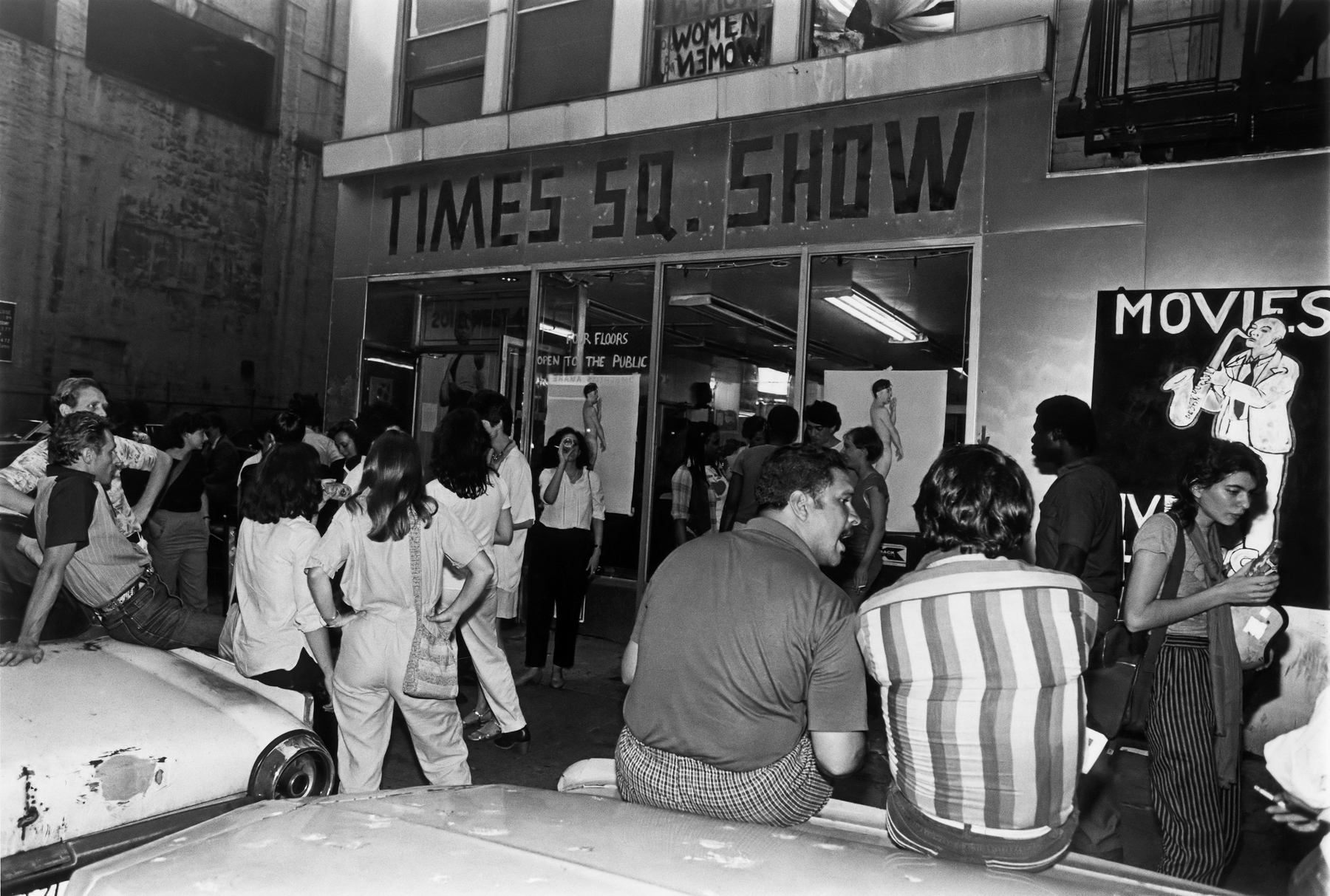
After The Real Estate Show, Colab went on to create the Times Square Show in an abandoned massage parlor on 41st Street and Seventh Avenue, as captured here by Terise Slotkin in 1980. Vintage black and white fiber print from silver gelatin negative, 8” x 10″ (20.3 x 25.4 cm). Photo: © Terise Slotkin Photography.
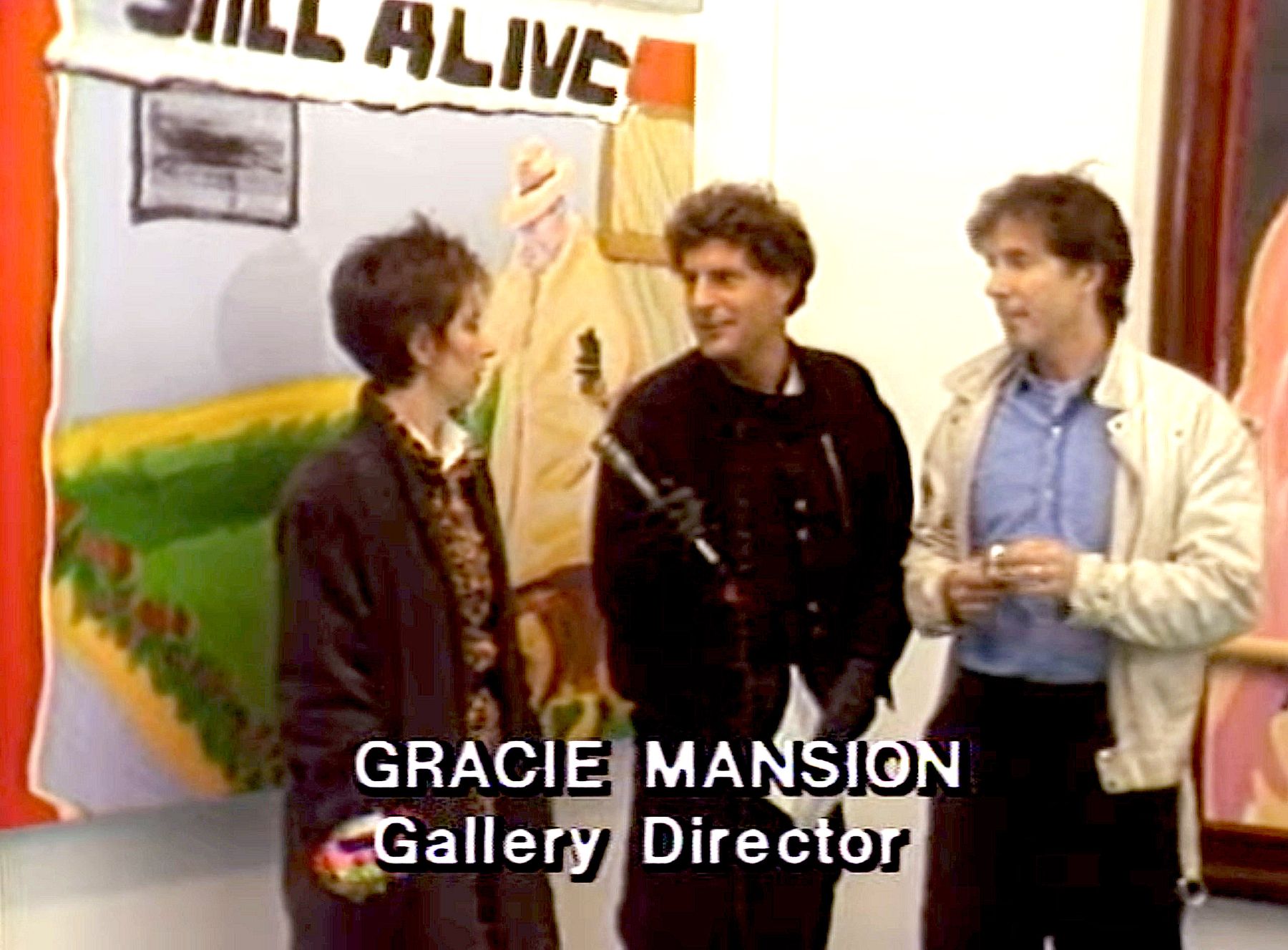
Still from NEW YORK'S 1985 EAST VILLAGE ART SCENE. Courtesy of WWW.TRIBALARTASIA.COM DAVID HOWARD TRIBAL ART.
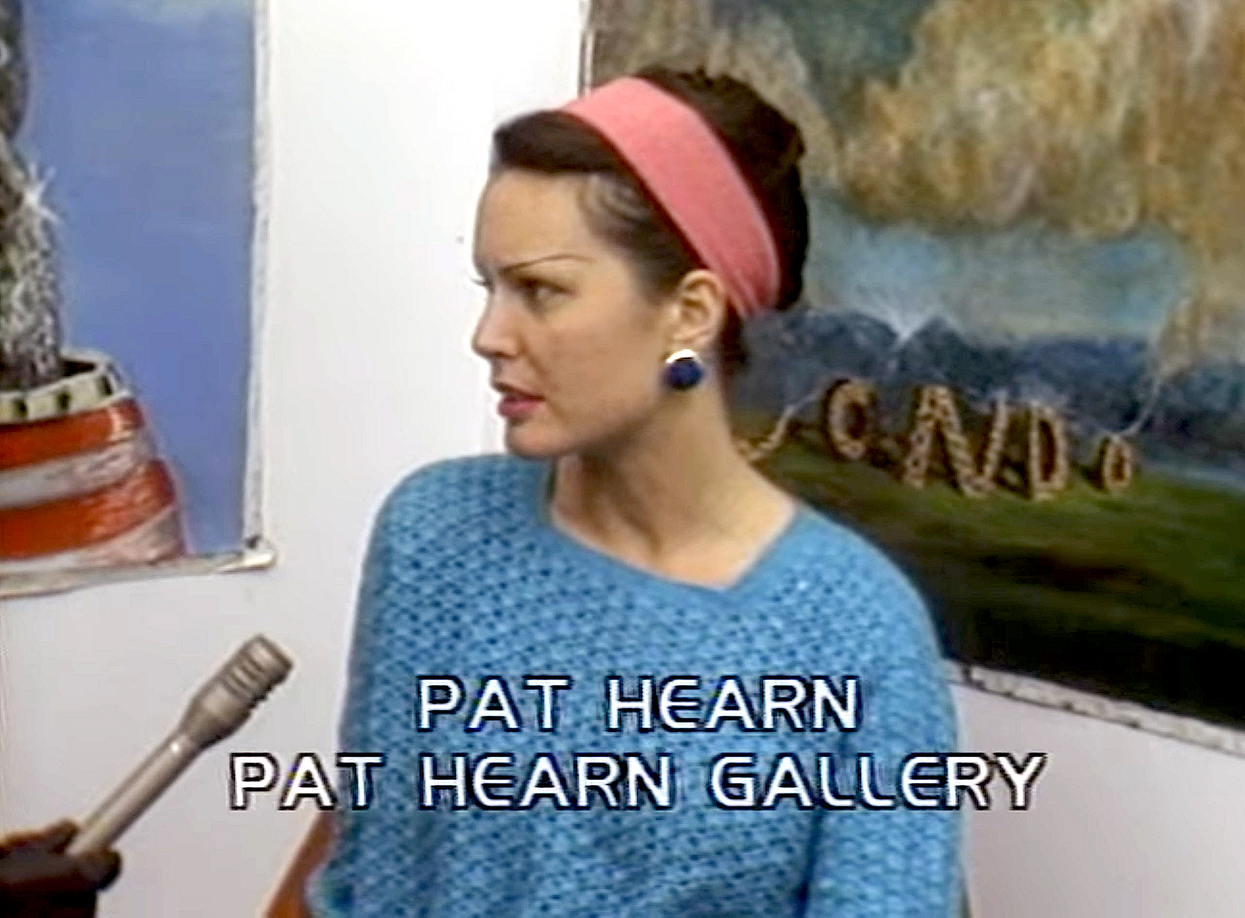
That was the state of the city when the artist and gallerist Gracie Mansion started looking for a more permanent space to show her own work and that of her friends in the early 1980s, after organizing shows in impromptu spaces like her apartment’s bathroom. “It was scary. It was like a war zone,” she says of the Lower East Side at the time. “There was a reason why the rents were so cheap.” The going rent for a gallery, she recalls, was about $500 a month. When her collaborator Sur Rodney found a space on East 10th Street, Mansion thought, “there's no decision here. Of course, it has to be that one, because of the reference to the earlier galleries that started there.”
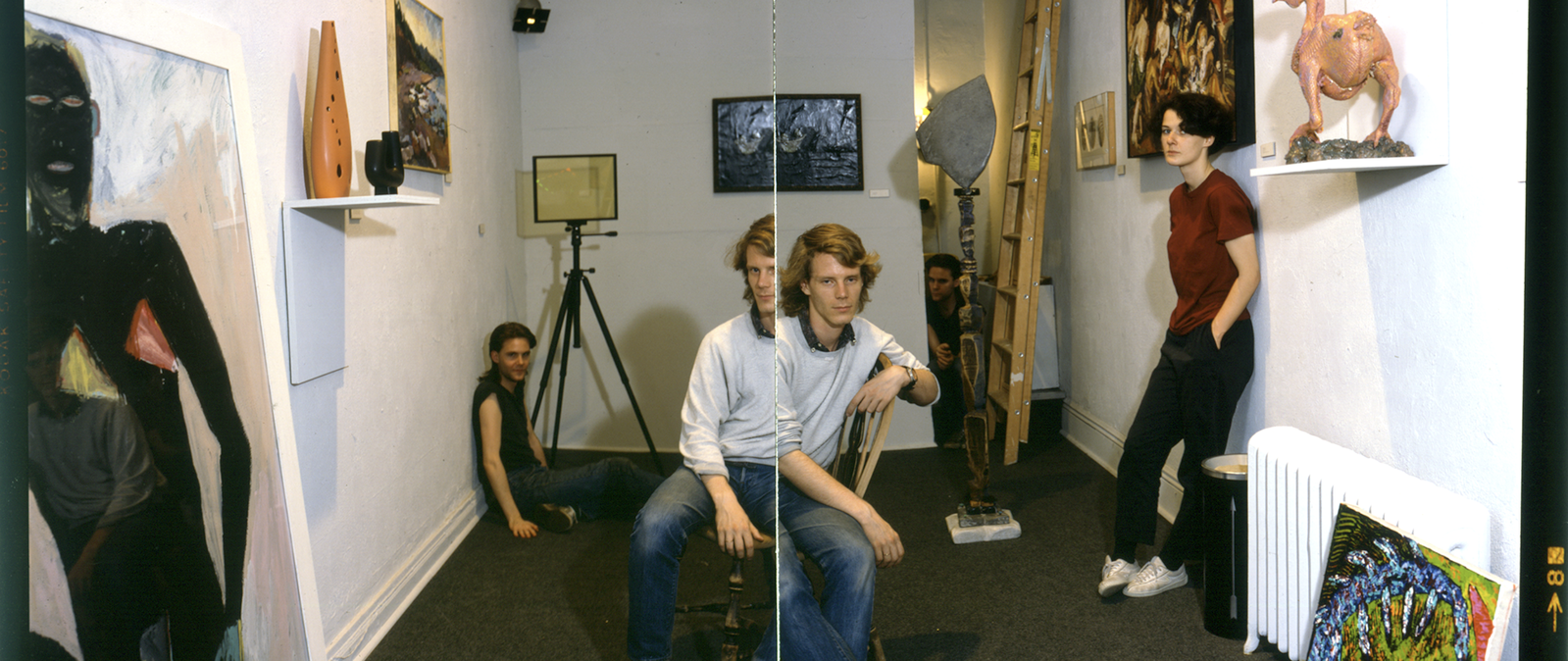
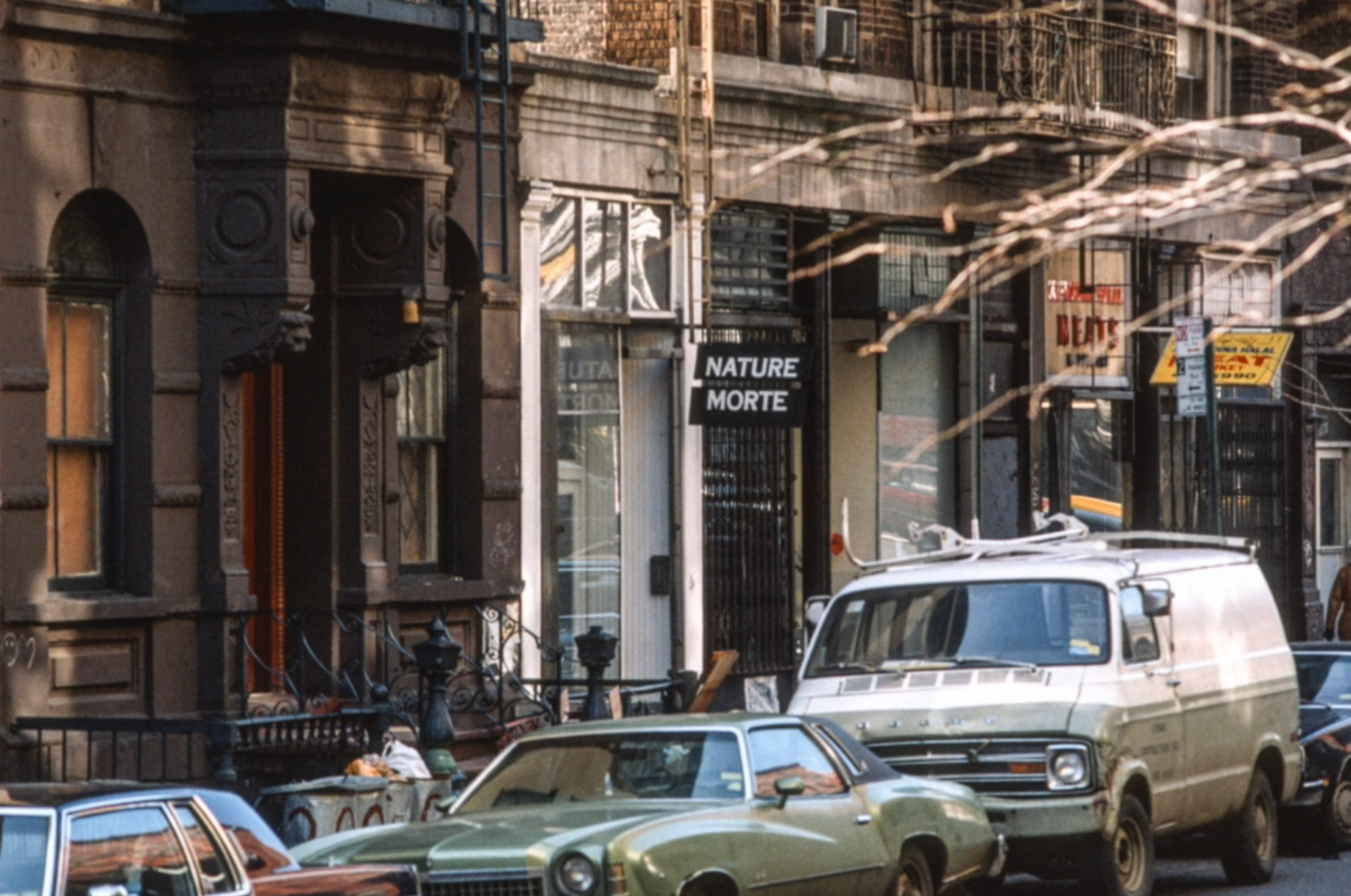
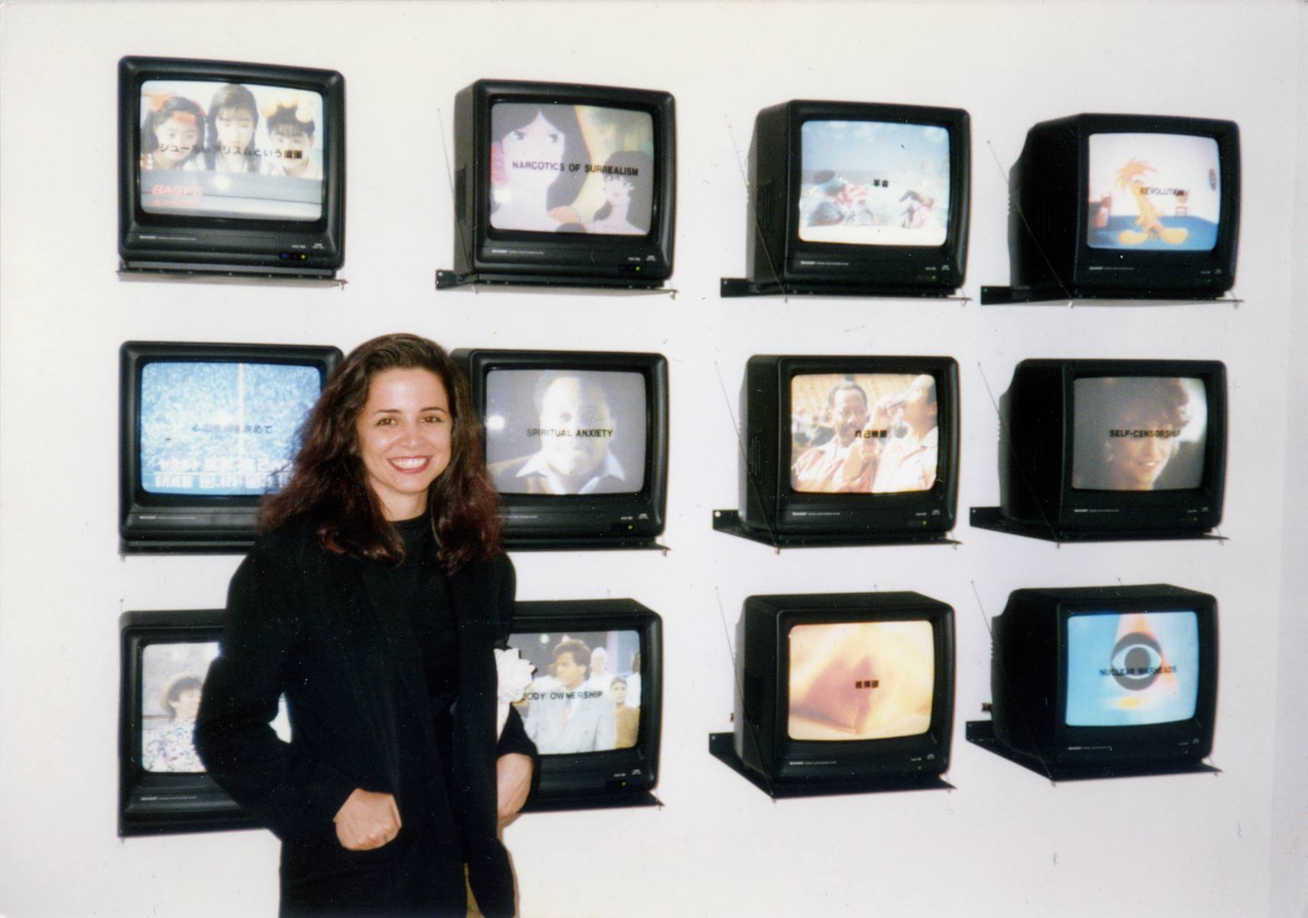
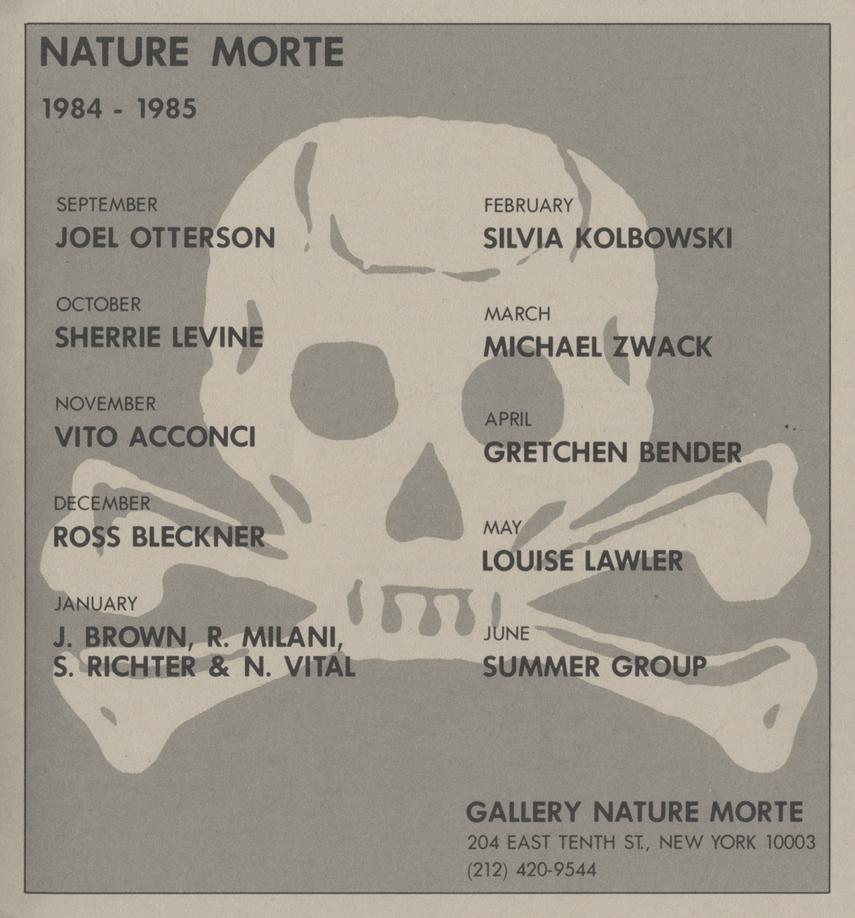
Nearby, Patti Astor and Bill Stelling’s Fun Gallery was showing the work of graffiti and street artists such as Jean-Michel Basquiat, Kenny Scharf, Lee Quiñones, and Futura 2000, and Civilian Warfare was launching the careers of artist like David Wojnarowicz, Luis Frangella and Richard Hambleton. Nature Morte, started by artists Peter Nagy and Alan Belcher, was presenting more conceptually inclined work by artists like Gretchen Bender, Vito Acconci, Louise Lawler, Sherrie Levine, Robert Gober, Barbara Kruger, Richard Pettibone and Laurie Simmons.
During installation of the inaugural group exhibition, May 1982, Gallery Nature Morte. From left to right: Peter Nagy, Alan Belcher, and Robin Weglinski. Courtesy of balanelcher.com.
Gallery Nature Morte, Courtesy of balanelcher.com.
Gretchen Bender with her piece at the Setagaya Museum, Japan, 1991. Courtesy of balanelcher.com.
Gallery Nature Morte advertisement in Zein Magazine, Issue #8, 1985. Courtesy of balanelcher.com.
Still from NEW YORK'S 1985 EAST VILLAGE ART SCENE. Courtesy of WWW.TRIBALARTASIA.COM DAVID HOWARD TRIBAL ART.
At the same time, ABC No Rio—a communal non-profit that grew out of the The Real Estate Show—had taken over another vacant building on Rivington Street to become a dedicated center of DIY and independent art-making. (It is due to open its new purpose-built home there this year.) Meanwhile, artists like Keith Haring and Nan Goldin were putting up their works in clubs like the Pyramid and Club 57.
“All of a sudden, within two or three months of each other, there were like ten galleries that opened up within a block or two independently, and they were all by artists,” Mansion says. “There was an immediacy to the environment there. You would know everybody on the street. You would figure out what you were going to do that night because of who you ran into that day and what was going on.”
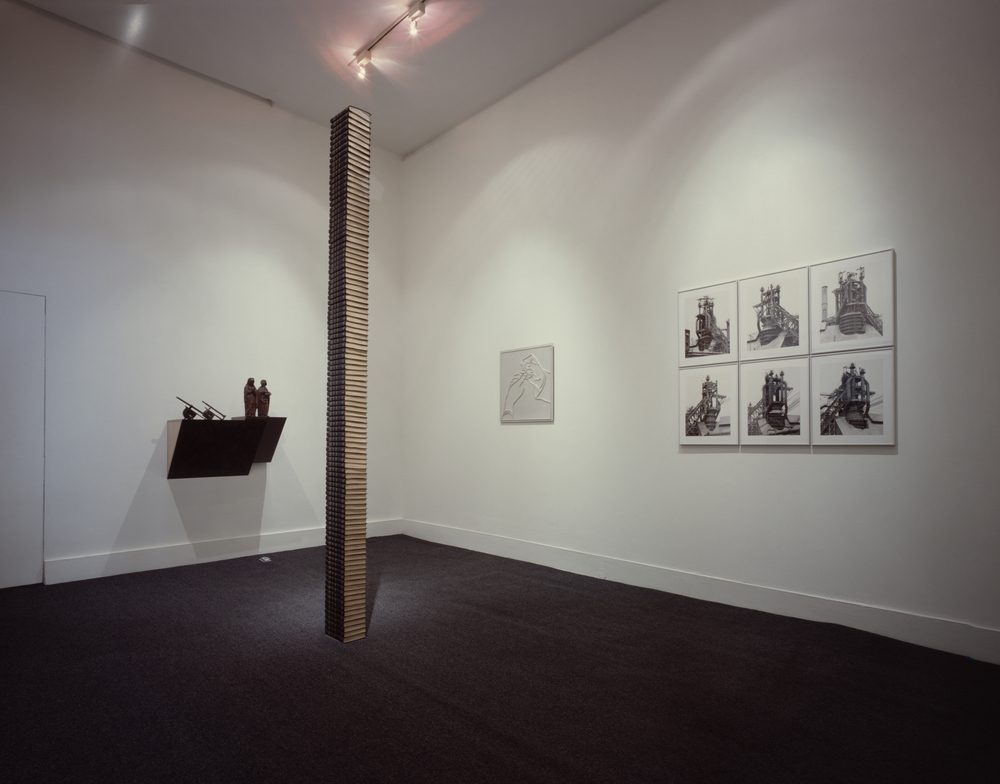
Installation view Bernd and Hilla Becher, Clegg & Guttmann, Tim Rollins + K.O.S., Peter Nagy, Haim Steinbach, 1987, photography by Ken Schles, Jay Gorney Modern Art, New York. Courtesy of Jay Gorney Modern Art. Courtesy of Jay Gorney Modern Art.
Within a few years, the neighborhood was teeming with artist-run spaces and galleries. When the dealer Jay Gorney decided to strike out on his own, after interning with Leo Castelli and working for Sidney Janis, he looked at the growing scene in the East Village and Lower East Side, particularly the galleries that showed more conceptual work, like Nature Morte, International with Monument, and Cash/Newhouse. “There was a lot of camaraderie and a lot of fun,” Gorney says, adding that the small size of the spaces and inexpensive rent made it easy for so many new galleries to get their start.
The boom was also a sign of the push among artists for places to show more experimental work. “Sometimes, when something seems hide-bound or closed-off, something has to happen at the other end—and believe me, I think we're heading for one of those situations very soon,” Gorney says. “When there's not a point of entry for young artists, for other points of view, something needs to happen.”
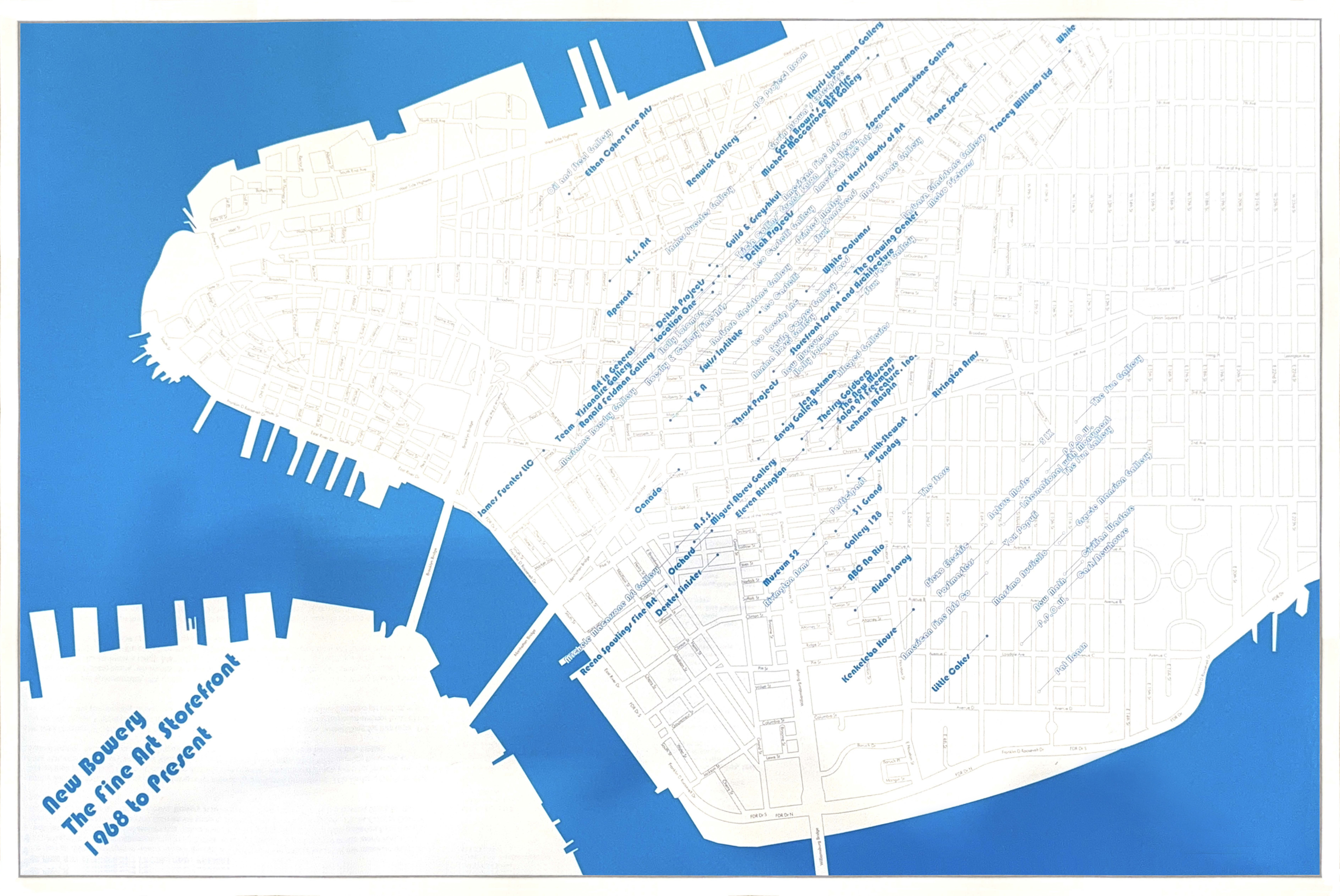
When James Fuentes opened his first gallery on Saint James Place in the Lower East Side in 2007, he published a map of the local gallery scene, tracking the nearly 100 art spaces that had existed in the neighborhood since 1968. An updated version of the map is due to be published during this year’s Independent. “I had obsessed over these bygone eras of New York art history—the SoHo of the 60s and 70s, the East Village of the 80s,” Fuentes says, “but I recognized that this was my chance to be a part of, and contribute something hopefully significant to, my generation's version of that.”
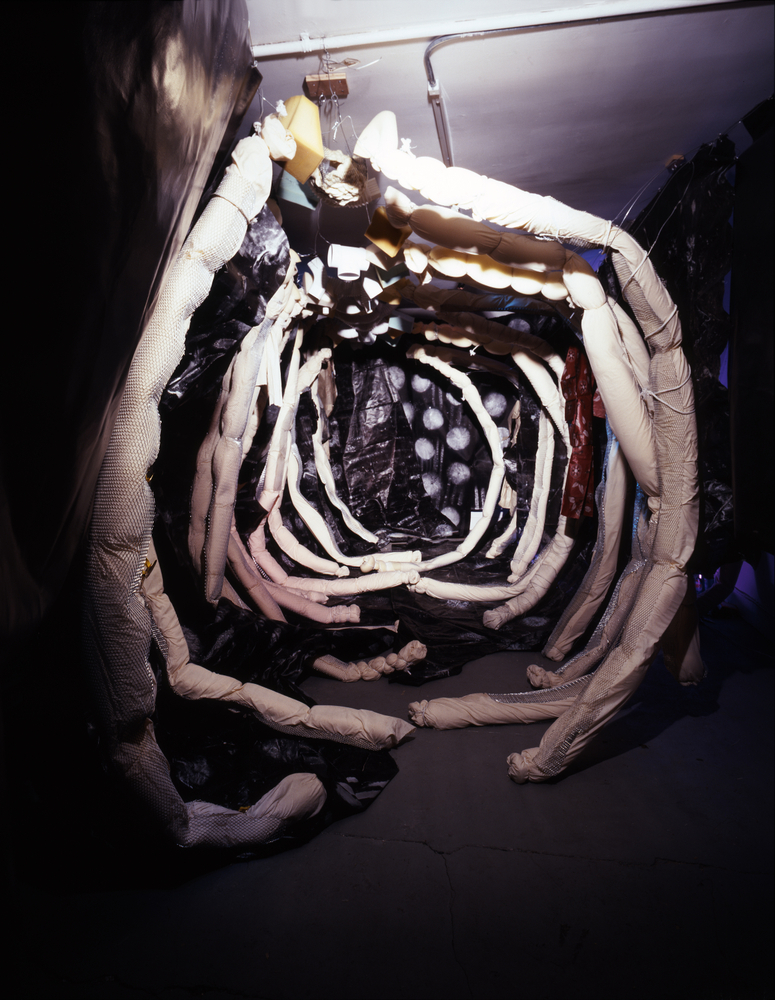
Installation view of Agathe Snow, Sludgie The Whale, 2007. "No Need to Worry, the Apocalypse Has Already Happened. . . when it couldn’t get any worse, it just got a little better", 2007, James Fuentes LLC, 35 St. James Place. Courtesy of James Fuentes Gallery.
Fuentes grew up in the Lower East Side as a child, and remembers seeing Haring chalk drawing on the street, so returning to the old neighborhood to realize his professional aspirations of opening his own space felt serendipitous. “It was this moment where the atmosphere that I was raised in was suddenly meeting my new paradigm, my interest in art,” he says. “It just felt so right.” Moving a little further north to Delancey Street in 2010, Fuentes was soon joined by other galleries, including Feature, Callicoon Fine Arts, Shoot the Lobster, and Brennan & Griffin. And although Fuentes relocated his gallery to Tribeca in 2024, following a larger gallery migration there, he now serves on the board of the Henry Street Settlement. “I feel actually more connected to the community than ever,” he says.
And while many of the galleries that first opened on the Lower East Side eventually moved to larger spaces in SoHo or Chelsea, another generation of artists and dealers continue to take their place. “Even when the gallery was just in my head, I always imagined it down here,” says dealer David Pagliarulo, who opened David Peter Francis on East Broadway in 2024, when he was 28-years-old. “Mostly because, when I think of galleries and location, everything feels so related to place.”
Part of that placehood was the neighborhood’s experimental history. “I think it's more expansive, more open in that way. It feels like you can kind of do whatever you want,” Pagliarulo says. In concurrent presentations at Independent and at his gallery in May, for example, he is showing work by the American artist Carrie Schneider, who pushes photography into the realm of sculpture by creating large scale prints hundreds of feet long that fold and bend over themselves into makeshift structures. Schneider will also be featured in this year’s Venice Biennale.
The New Bowery Map, courtesy of Jame Fuentes Gallery.
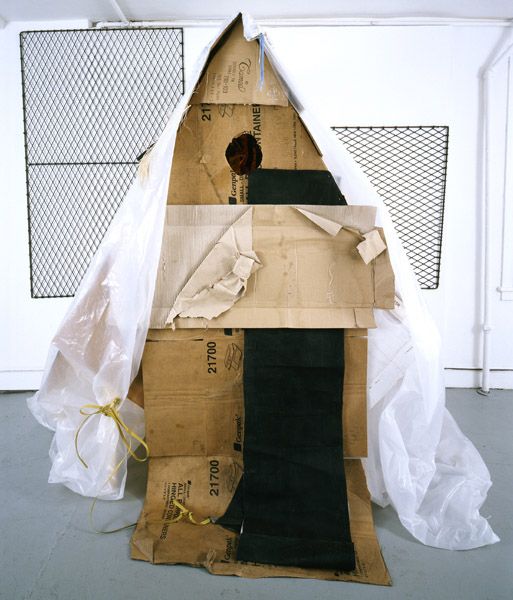
Installation view of Lizzi Bougatsos, Birdhouse for Humans, 2007, cardboard, metal grating, and mixed mediums, 113 x 97 x 93 in. Street Feather, 2007, James Fuentes LLC, 35 St. James Place. Courtesy of James Fuentes Gallery.
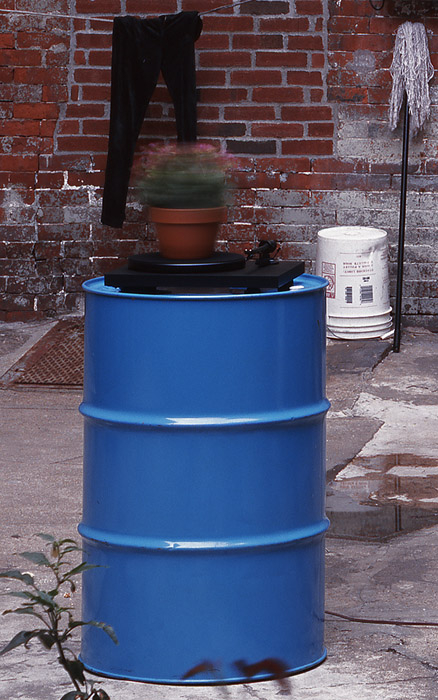
Installation view of Roman Signer, Flower Pot, 2008, oil drum, record player, flower pot (kalancoe), 33 1/3 RPM, 48 x 24 x 24 in. Flower Pot, 2008, James Fuentes LLC, 35 St. James Place. Courtesy of James Fuentes Gallery.
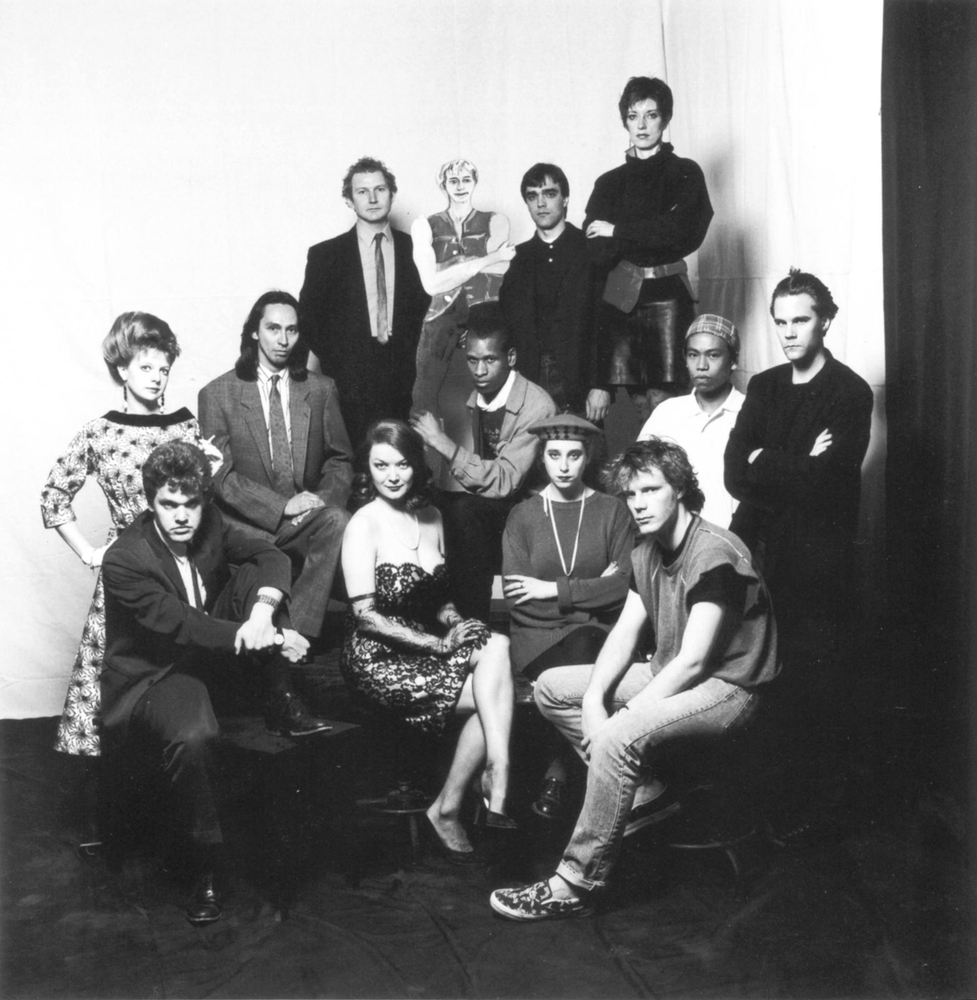
The New Irascibles: Dealers 1, 1985, photography by Timothy Greenfield Sanders. Image features: Doug Milford, Lisa McDonald, Bill Stelling, Patti Astor, Sur Rodney (Sur), Nina Seigenfeld Velazquez, Alan Barrows, Dean Savard, Rich Colicchio, Gracie Mansion, Alan Belcher, and Peter Nagy. Courtesy of balanelcher.com.
Pagliarulo points to the cooperative space Orchard, which was run by a collective of artists, filmmakers, critics, historians, and curators for only three years, from 2005-08, as an important reference point for his own program. “They're the icons in so many ways,” he says. The crucial work of Orchard will be preserved as part of The New York Gallery History Project, an initiative run by Independent and the Los Angeles-based nonprofit Contemporary Art Library that gives open and searchable access to an online archive of important New York City exhibitions by key galleries that are no longer in operation, from the 1980s to today.
Pagliarulo adds that the arrival of gallerists from outside of the city, who are opening spaces on the Lower East Side, is a sign of the continued excitement around the area. One example is Hong Kong’s Kiang Malingue, which is also taking part in Independent with Taiwanese artist Tseng Chien-Ying, showing work created during a recent residency at the Lower East Side studio 99Canal. “The Lower East Side will always be a place for art,” Pagliarulo says. “It's never gonna go away.”
Helen Stoilas is a New York-based arts writer and former Editor, Americas of The Art Newspaper.